
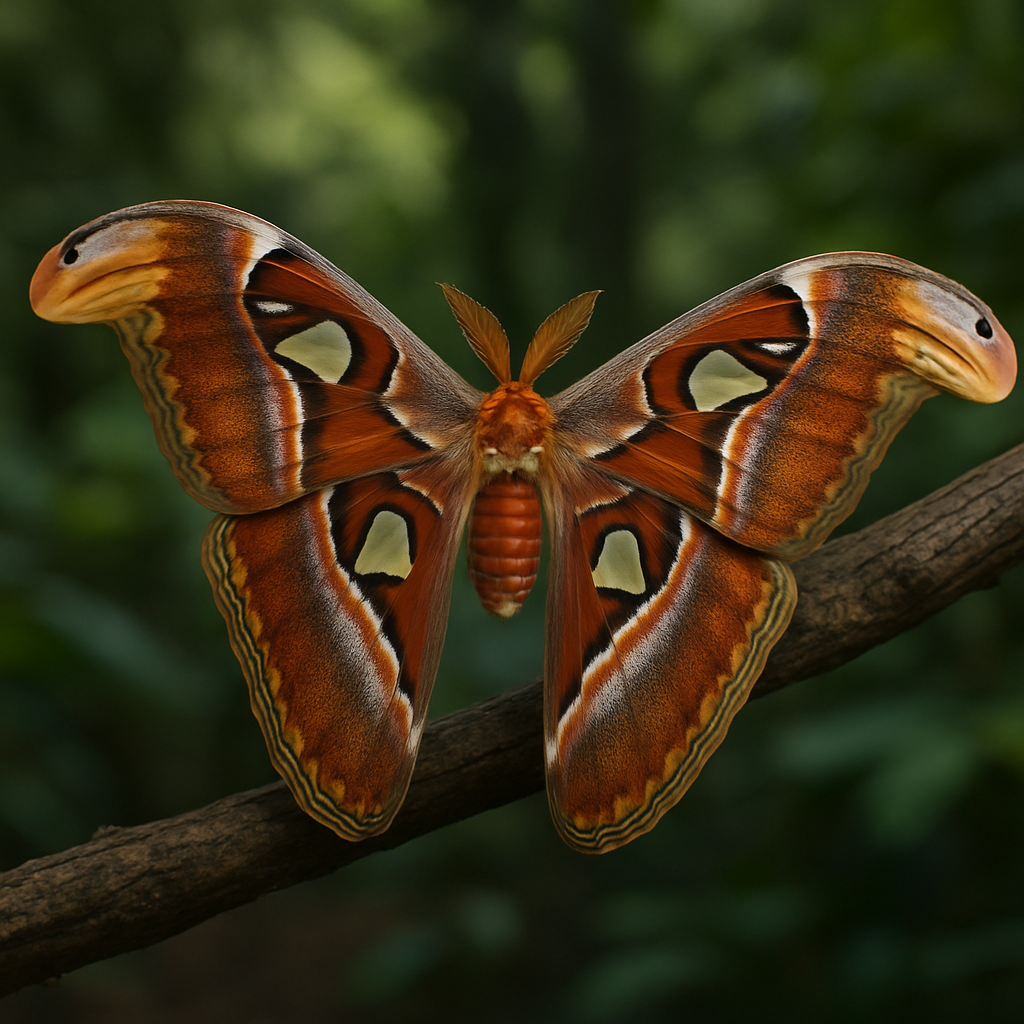
In the dense, humid forests of Southeast Asia, a creature emerges that seems less insect and more living tapestry. With wings that can span nearly a foot across, patterned like fallen leaves and edged with colors of rust, amber, and shadow, the Atlas Moth (Attacus atlas) is both spectacle and enigma. To encounter one is to glimpse nature’s artistry at its grandest scale, a fleeting vision in twilight.
A Giant of the Skies
The Atlas Moth is among the largest moths in the world, yet it carries a paradox within its fragile body. Its wings are vast and commanding, yet its mouthparts are vestigial—nonfunctional. Unlike butterflies that sip nectar, the Atlas Moth does not eat. Emerging from its cocoon in a final act of metamorphosis, it has but a week or two to live. Its sole purpose: to reproduce.
There is poetry in this brevity. For all its grandeur, the moth’s existence is a vanishing act, a reminder that beauty is not measured in permanence but in intensity.
The Language of Disguise
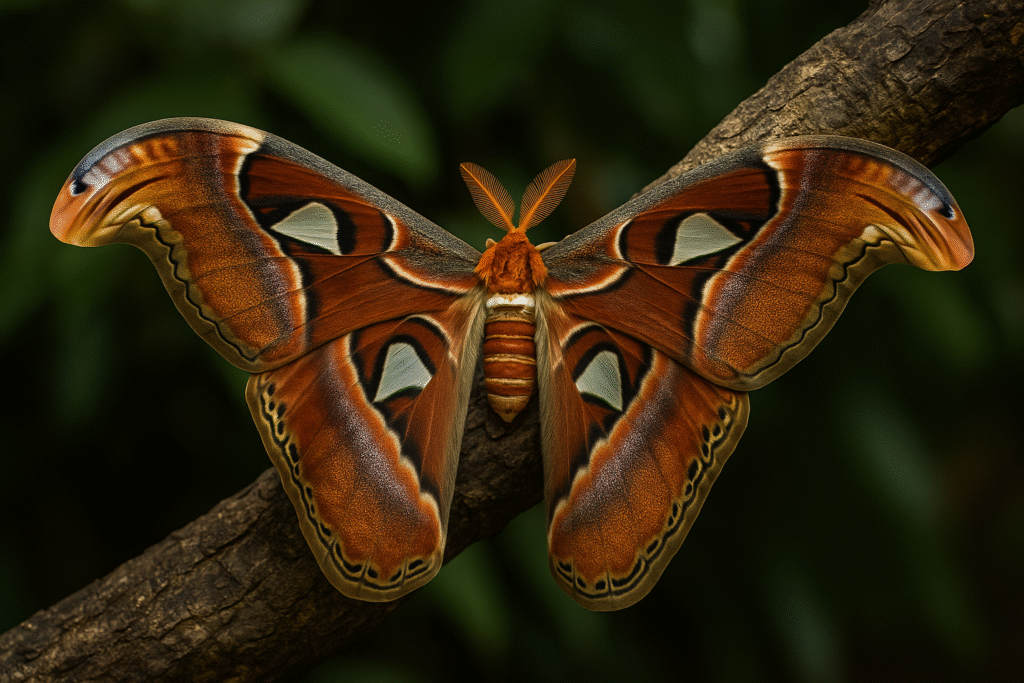
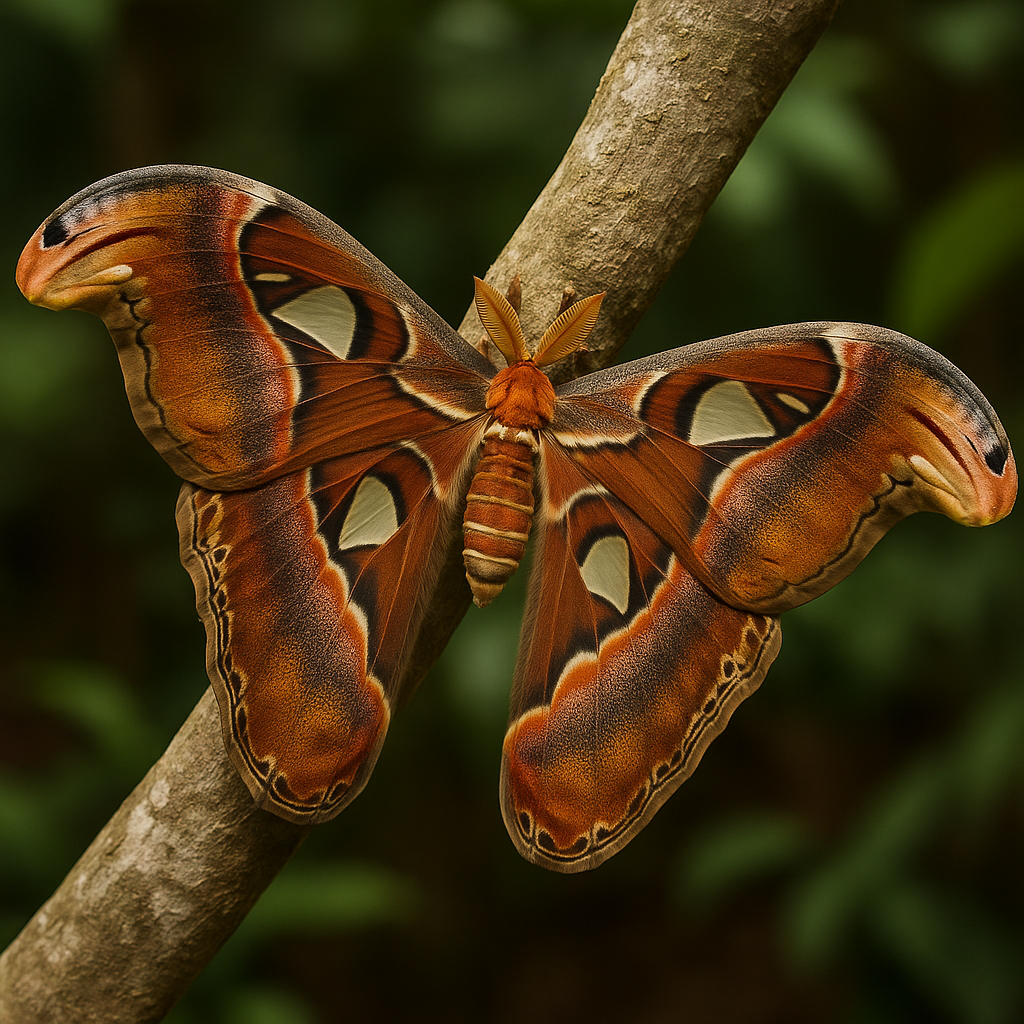
Its wings, patterned with complex mosaics of browns, oranges, and silvers, bear markings that resemble the heads of serpents. Scientists believe these deceptive patterns serve as a defense mechanism—deterring predators who mistake the moth for something venomous. In the canopy’s dim light, its wings fold into mimicry so precise that it disappears among dead leaves, reminding us that survival in the wild is as much about illusion as strength.
Myth and Meaning
Local folklore imbues the Atlas Moth with symbolism. In some cultures, its ghostly presence at night is seen as a harbinger, a spirit flitting between realms. In others, its serpentine wingtips are regarded as omens of guardianship, protectors disguised in delicate form. Its name itself—Atlas—hints at titanic burden, evoking the mythic giant who held the sky.
Yet in the moth’s case, the burden is different: to live magnificently for only a moment, and then surrender to time.
A Fragile Future
Like many insects, the Atlas Moth faces the quiet erosion of its habitat. Deforestation in Southeast Asia reduces the dense forests where it breeds and hides. Though not currently endangered, its rarity in the wild has turned it into a curiosity, often displayed in collections behind glass. In captivity, its life cycle is studied with wonder, but something of its mystery dissolves outside the forest.
A Testament to Ephemeral Grandeur
The Atlas Moth is not a predator, nor a symbol of survival through strength like the crocodile or mantis. Instead, it stands for something subtler: the magnificence of fragility. Its enormous wings carry no power to hunt, its body no weapon for defense. And yet, in its silent flight, it becomes unforgettable.
To watch an Atlas Moth glide through a forest clearing is to be reminded that not all greatness endures. Some greatness is fleeting, burning briefly against the dark before vanishing into memory.

Reply