
In the arid savannahs and volcanic slopes of Indonesia, where the earth crackles with heat and the air shimmers in waves of mirage, lives a reptile that commands both awe and dread. The Komodo Dragon (Varanus komodoensis), the world’s largest living lizard, is not a creature hidden in myth—it is myth incarnate, a reminder that the age of giants never truly ended.
The Titan of Lizards
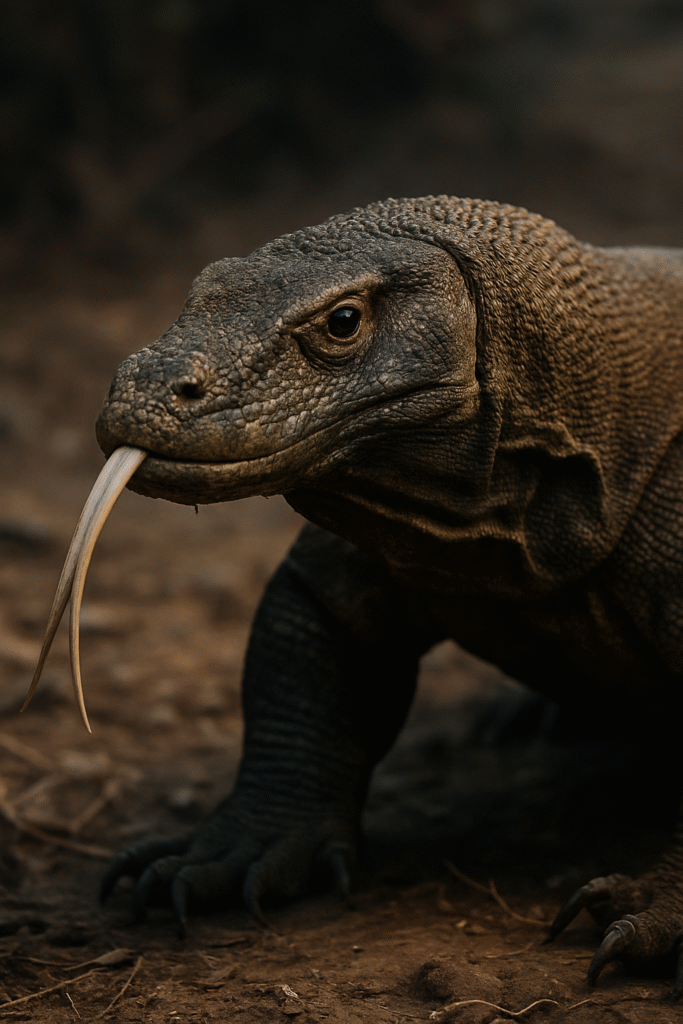
Growing up to three meters in length and weighing more than 70 kilograms, the Komodo Dragon is an apex predator whose size alone marks it as extraordinary. Its muscular frame and rough, armored skin evoke the ancient reptiles of prehistory, while its forked tongue, flicking against the air, reads invisible maps of scent. To encounter one in the wild is to step into a living fossil’s domain—a world where time seems to have slowed and survival retains its raw, primal edge.
Predator with Patience
Unlike the lightning ambushes of crocodiles or the coiled strikes of snakes, the Komodo Dragon is patient, deliberate. It stalks silently, conserving energy beneath the merciless sun. When it strikes, its bite is both weapon and wound—its serrated teeth tear flesh, while venom, discovered only in recent decades, floods the victim’s bloodstream with toxins that induce shock and prevent clotting. Prey may stagger away, but the Dragon follows, unhurried, until weakness wins. In the end, there is no escape from time, or from patience.
Between Myth and Reality
For centuries, the people of the Lesser Sunda Islands have revered the Komodo Dragon as more than beast. Local legend tells of a dragon princess who gave birth to twins: one human, one reptile. The story insists they are siblings, bound by blood and spirit. To harm a Komodo, then, was once taboo—a violation not just against nature, but against kinship. Even now, ceremonies of respect echo across the islands, blurring the line between folklore and natural history.
A Fragile Reign
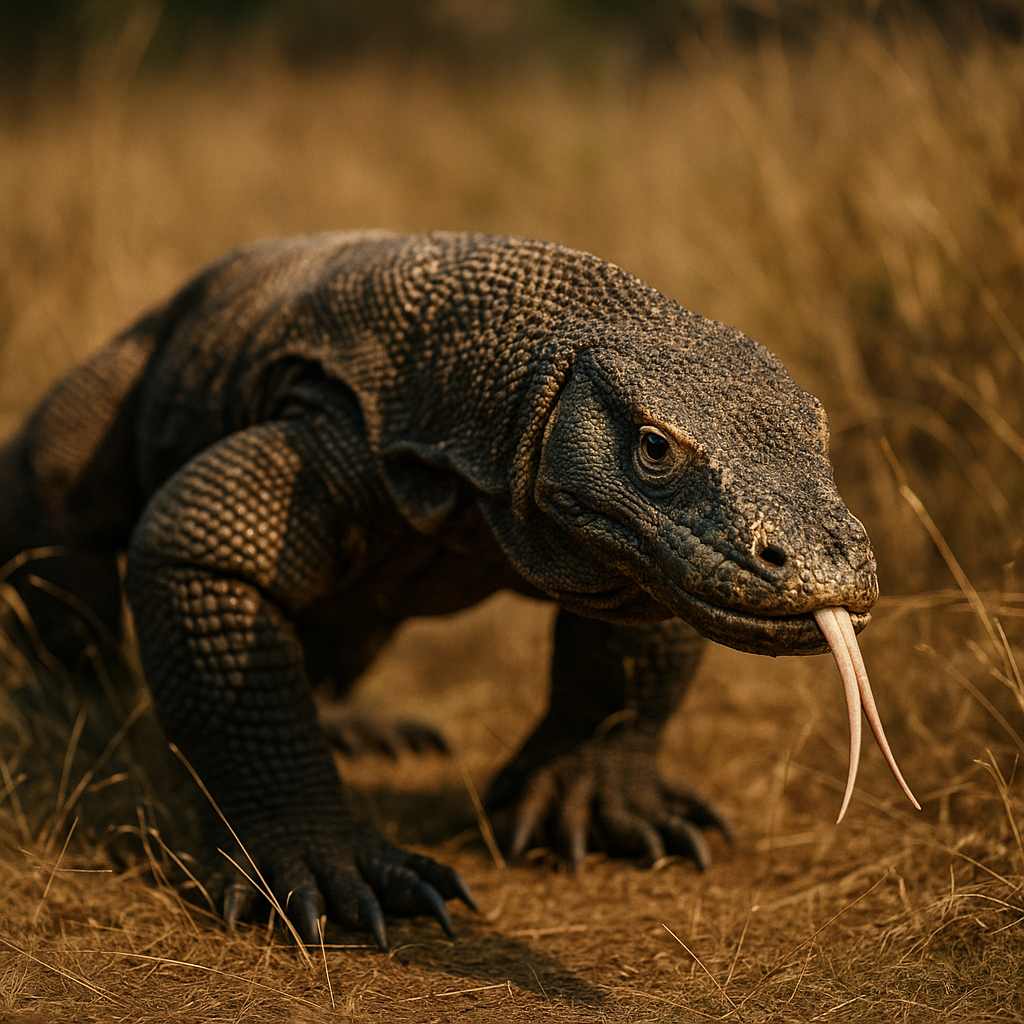
Yet despite its ferocity, the Komodo Dragon is a fragile monarch. Its range is limited to a handful of Indonesian islands—Komodo, Rinca, Flores, Gili Motang, and Padar. Rising sea levels, shrinking habitats, and dwindling prey threaten its survival. Climate change, scientists warn, could erase 70% of its habitat within the next century. The image of this primeval predator stalking the volcanic ridges could fade, leaving behind only legend.
Symbol of Endurance
Still, the Komodo Dragon endures as a symbol of resilience. It is not only a predator but an ecological keystone, shaping the balance of its environment. And for us, it is a living link to a time when reptiles ruled the earth, a reminder that evolution is less a ladder than a labyrinth, with ancient paths that still cross our own.
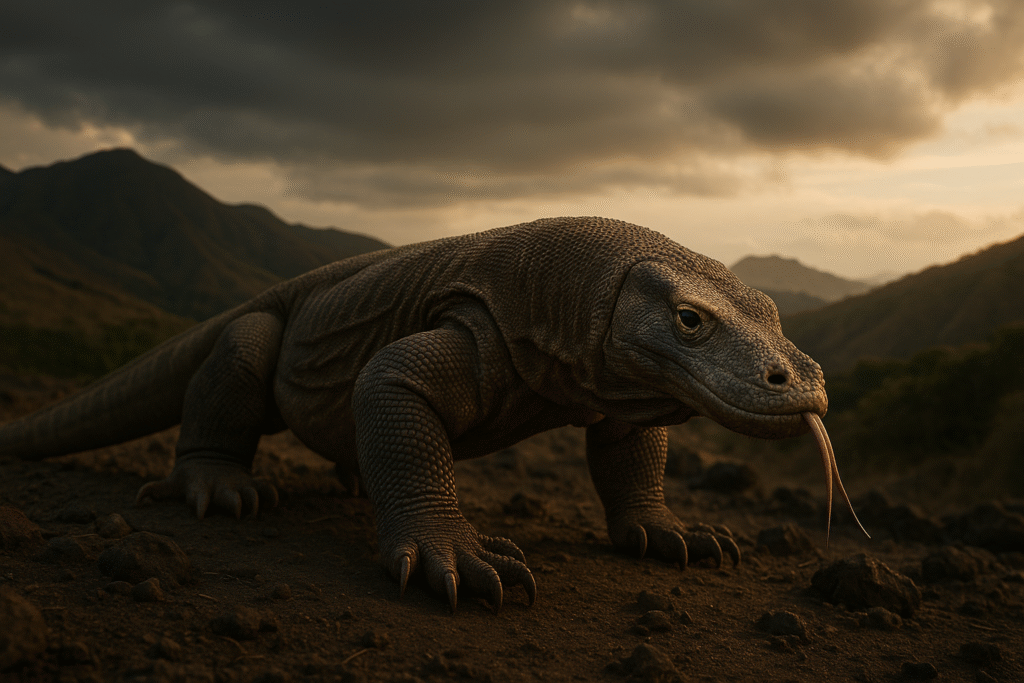
The Dragon’s reign, like all reigns, is finite. Yet while it stalks the forests and beaches of its island realm, it commands not just fear, but reverence—a shadow of scales reminding us of both the fragility and ferocity of life.
Reply