
Reptiles are not simply animals of scale and shadow; they are living monuments of deep time. To look at one—whether it be a snake coiled beneath leaves, a turtle sunning itself on a rock, or a crocodile watching with unblinking eyes—is to be reminded that Earth’s story is far older than humanity’s brief spark.
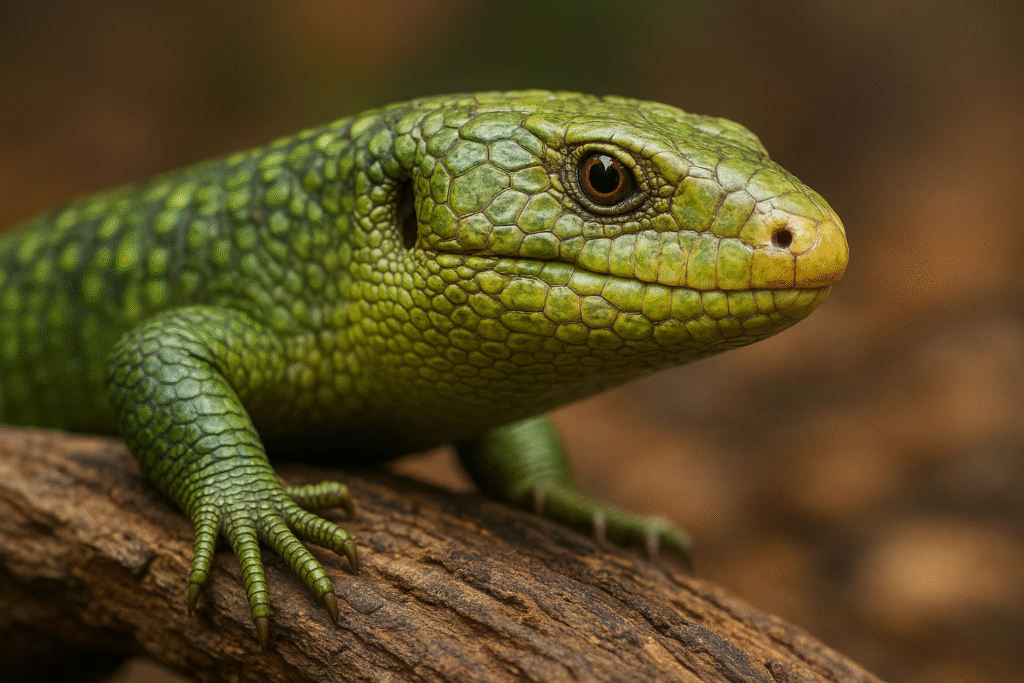
Their survival across more than 300 million years, through asteroid strikes, volcanic winters, ice ages, and the rise and fall of empires, makes reptiles the true heirs of antiquity. Where temples crumble and dynasties fade, reptiles remain, silent but enduring.
Origins: The First Architects of Land
Around 320 million years ago, during the Carboniferous period, reptiles broke free from the constraints of water. The innovation of the amniotic egg, self-contained and armored in a shell, was a revolution—no longer did life need to return to ponds to breed. From this point forward, land belonged not only to forests but also to creatures that could carry their water within.
From those first pioneers would descend not only lizards, snakes, crocodiles, and turtles, but also the mighty dinosaurs—who for 160 million years ruled Earth in forms as diverse as the titanic sauropods and the fleet-footed raptors. When the asteroid struck at the end of the Cretaceous, most perished, but not all. Crocodiles, turtles, and lizards endured. The legacy of reptiles is not extinction, but persistence.
Anatomy of Timelessness
Every scale, every bone in a reptile’s body tells the story of survival.
- Scales: not merely protection, but a desert shield, preventing water loss in hostile climates.
- Ectothermy: often dismissed as “cold-bloodedness,” yet it is brilliance in disguise. By requiring little energy, reptiles can outlast droughts, famines, and scarcity where mammals would perish.
- Skulls and jaws: crocodiles possess bite forces unmatched by any mammal; snakes unhinge their jaws to consume prey larger than their own heads.
- Shells: in turtles, the fusion of ribs and spine into an armored dome created one of nature’s most perfect defensive strategies.
These adaptations are not accidents—they are designs honed by deep time, proof that perfection often means simplicity.
Masters of Stillness
Perhaps the greatest lesson reptiles offer is the philosophy of stillness. A crocodile may drift unnoticed for hours, waiting for the ripple of prey. A chameleon freezes in plain sight, trusting its colors and stillness to make it vanish. A snake coils and waits, knowing that patience is power.
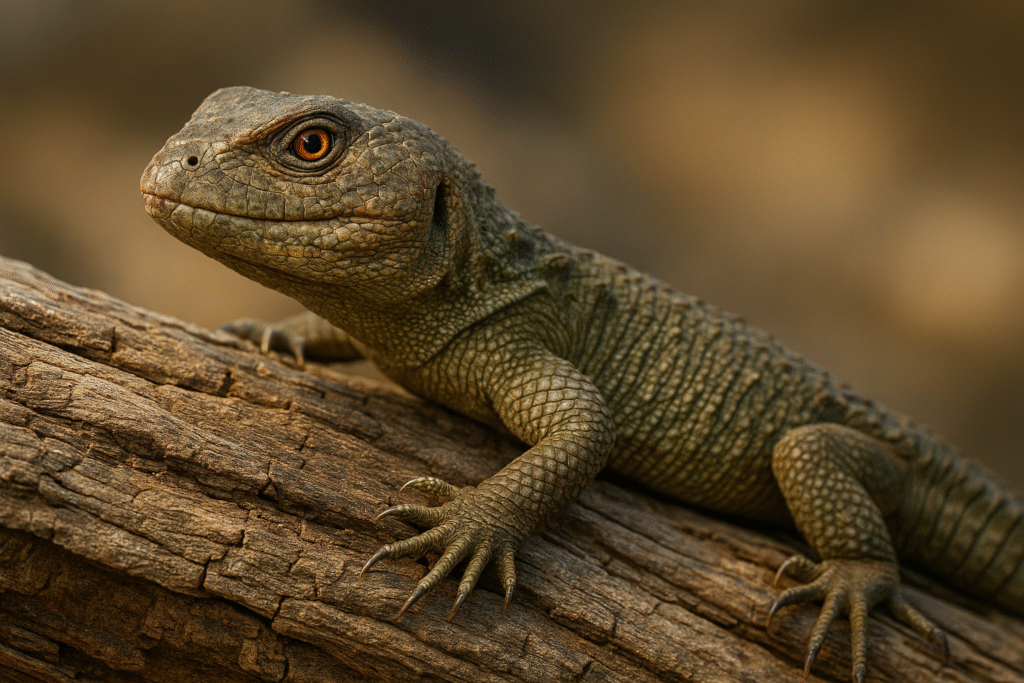
Human cultures recognized this: to meditate like a reptile was to embrace eternity in the moment. The snake became a symbol of cycles, of death and rebirth, of beginnings hidden within endings.
Reptiles in Myth and Memory
Reptiles are woven deeply into the fabric of myth:
- Egypt: The cobra goddess Wadjet crowned pharaohs, her hood flaring as divine guardianship. The crocodile god Sobek ruled fertility and military might, a paradox of protection and terror.
- Mesoamerica: The feathered serpent Quetzalcoatl embodied wisdom, renewal, and the union of sky and earth.
- China: The dragon became a celestial symbol of power, prosperity, and balance, drawn from snakes and crocodiles yet transformed into a cosmic guardian.
- Norse traditions: Jörmungandr, the world-serpent, lay coiled beneath the sea, destined to rise at the world’s end.
From sacred temples to folk tales, reptiles were never mere animals—they were cosmic actors, bridges between life and death, chaos and order.
Modern Science: Wonders of Behavior
Beyond mythology, reptiles astonish science with their behaviors:
- Komodo dragons, apex lizards of Indonesia, bring down deer with venom and patience, their forked tongues tasting the air.
- Sea turtles navigate entire oceans with magnetic senses, returning after decades to the exact beach where they were born.
- Crocodiles perform maternal care unexpected in such ancient creatures, guarding nests and gently carrying hatchlings in their jaws.
- Snakes wield venoms not only as weapons but as complex biochemical cocktails that inspire modern medicine.
Each reptile is not only an echo of prehistory, but also a window into biological genius.
The Edge of Survival
Yet, in the Anthropocene, reptiles are not invincible.
- Habitat loss shrinks nesting beaches for turtles, mangroves for crocodiles, and forests for iguanas.
- Illegal trade steals tortoises, pythons, and lizards from the wild, feeding markets that strip biodiversity.
- Climate change alters the very sands where turtles nest—because the sex of hatchlings depends on temperature, rising heat produces skewed populations that threaten future survival.
For all their ancient power, reptiles face a new predator unlike any they’ve known: humanity.
The Philosophical Legacy
Reptiles remind us of truths we often forget:
- That survival is not speed, but patience.
- That power is not always loud, but enduring.
- That nature’s wisdom is written not only in mammalian cleverness or avian flight, but in the silent vigilance of scales and stone-like eyes.
To encounter a reptile is to encounter time itself—to be stared at by a being that has seen ages pass, and may yet see ages to come.
Why They Endure
Reptiles endure because they embody balance. They can wait, adapt, vanish, and reappear. They remind us that antiquity is not dead—it breathes in scales, crawls across riverbanks, and slides silently through rainforests.
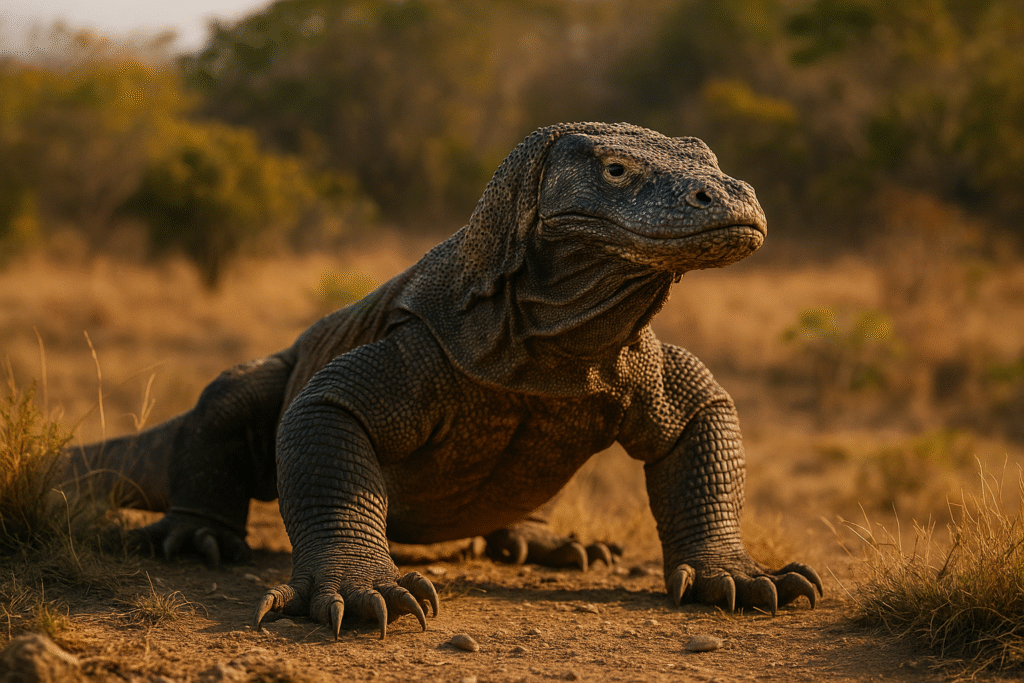
Their legacy is not only in myth or bone, but in their living presence, whispering across deserts, oceans, and jungles that survival is not about conquest, but about harmony with time itself.

Reply