
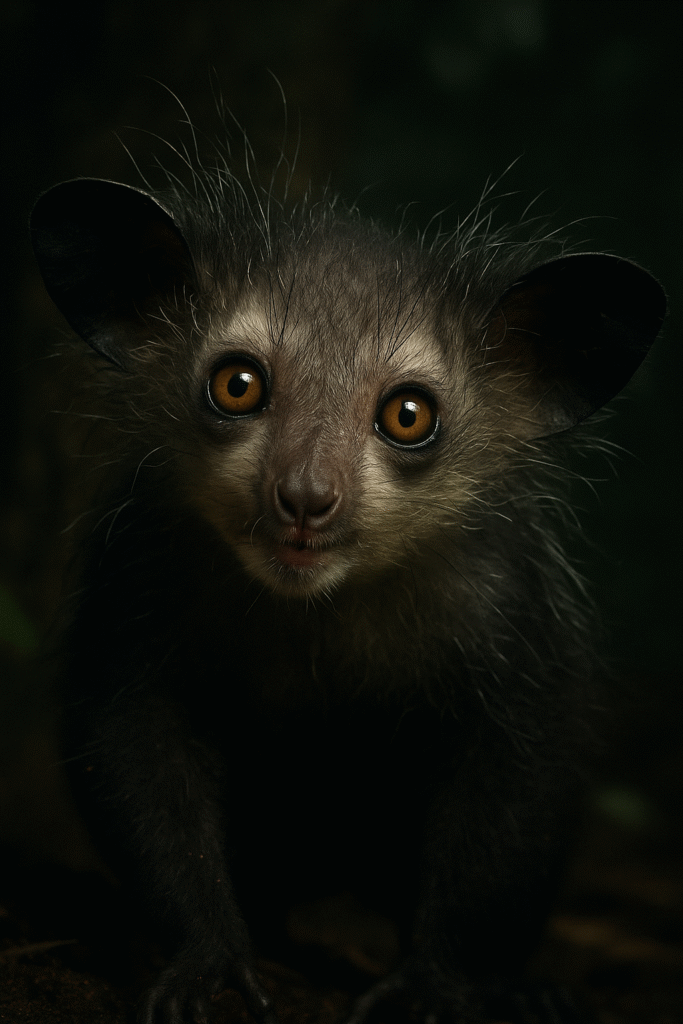
In the deepest forests of Madagascar, where moonlight filters through tangled vines and the canopy breathes in whispers, there lives a creature that seems stitched from myth more than bone. Its eyes glow like lanterns, its teeth gnaw like a rodent’s, and its spindly middle finger—longer than any other digit—taps on wood as if knocking on the gates of another world.
This is the aye-aye (Daubentonia madagascariensis): feared, misunderstood, and yet one of the most extraordinary survivors of the night.
The Anatomy of the Uncanny
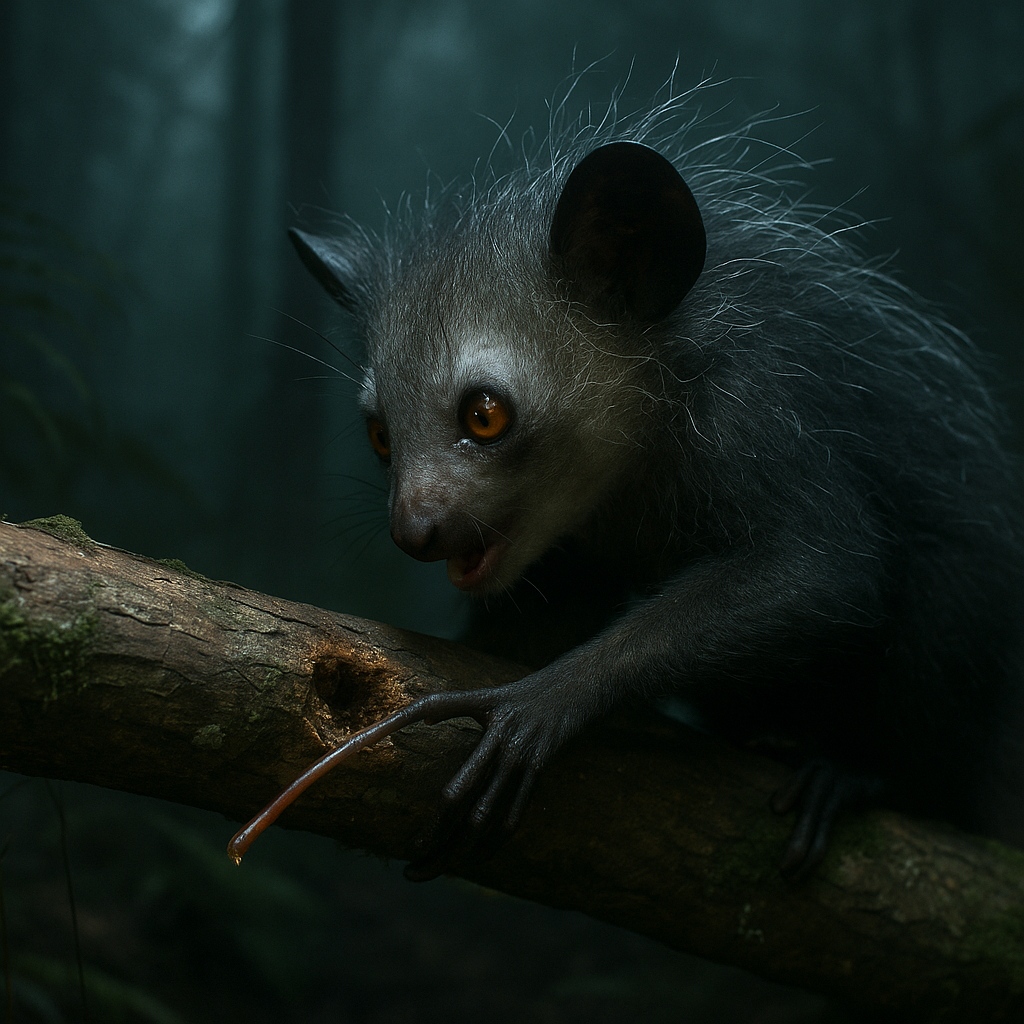
At first sight, the aye-aye defies categories. It is a lemur, yet its teeth grow continuously like a beaver’s. Its enormous ears swivel with bat-like precision, and that grotesque middle finger—thin as a wand—acts like a living divining rod. With it, the aye-aye taps along branches, listening for hollow vibrations that reveal burrowing insects beneath the bark. Once it detects movement, it chisels into the wood with rodent teeth, then slides the finger inside like a key, extracting the hidden life within.
To watch it feed is to see patience sculpted into instinct, an art older than fire.
The Curse of Superstition
But in villages shadowing the rainforest, the aye-aye’s appearance tells a darker tale.
For generations, Malagasy folklore has branded it a harbinger of death.
Some believe that if its long finger points at you, it seals your fate. Others see it as a spirit of misfortune, a phantom that must be killed on sight.
This mythology has made the aye-aye one of the most persecuted animals in Madagascar. Forests vanish under axes and flames, but often it is fear that sharpens the blade against this strange lemur.
The Architect of Balance
Yet the aye-aye is not a curse—it is a keystone. By feeding on wood-boring insects, it spares trees from infestations and sustains the cycle of forest renewal. It consumes seeds, fruits, and nectar, scattering them through the undergrowth, turning superstition into sustenance for the land. Where it lives, the forest grows healthier, more alive, more resilient.
In truth, the aye-aye is not a phantom but a guardian, hidden in plain sight.
The Vanishing of Night’s Sentinel
Today, aye-aye populations shrink under the twin blades of deforestation and fear. Madagascar’s rainforests fall to farmland and logging, and villagers still kill aye-ayes when chance brings them face to face. Conservationists work tirelessly, establishing sanctuaries and educating communities, reframing the narrative: that this animal is not a bad omen, but a fragile miracle, an echo of Madagascar’s ancient life.
The Symbol in the Shadows
Perhaps the aye-aye’s gift is not only ecological but symbolic. It asks us to look again at what we fear, to see the strange not as monstrous but as wondrous. Its long finger is not a curse but a tool of survival. Its luminous eyes are not ghostly, but guides through the darkness.
To know the aye-aye is to recognize that mystery itself is sacred.
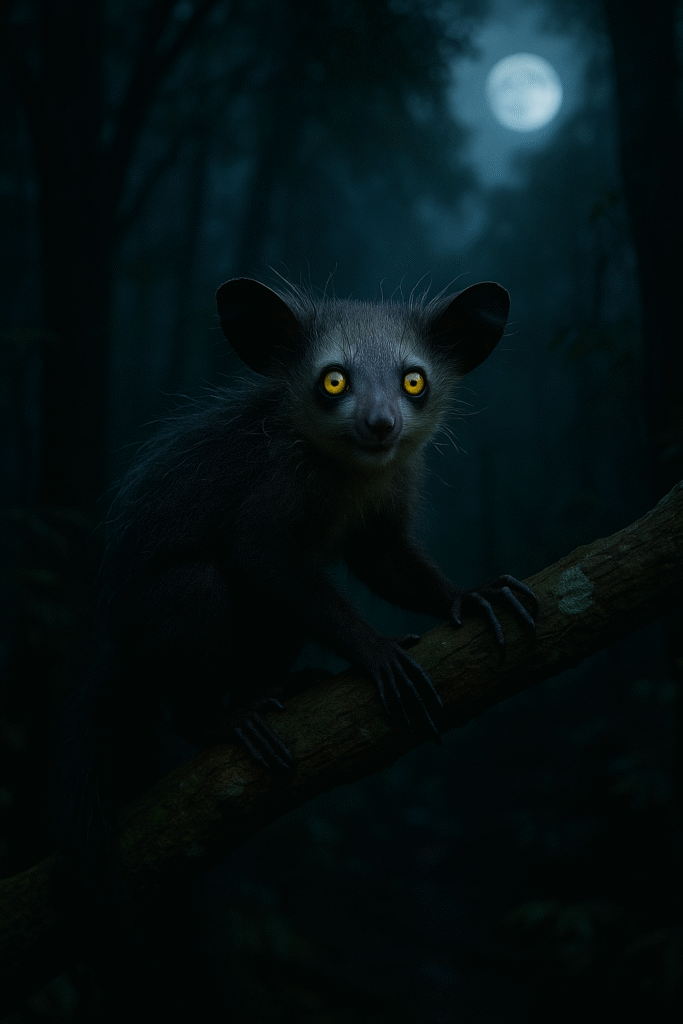
The forest at night is a chorus of silence, and in that silence, the aye-aye reigns—not as a demon, not as a curse, but as a quiet keeper of balance, knocking patiently on the wood, reminding us that even in the strangest forms, life carries the wisdom of survival.
Reply